

 ພາສາລາວ
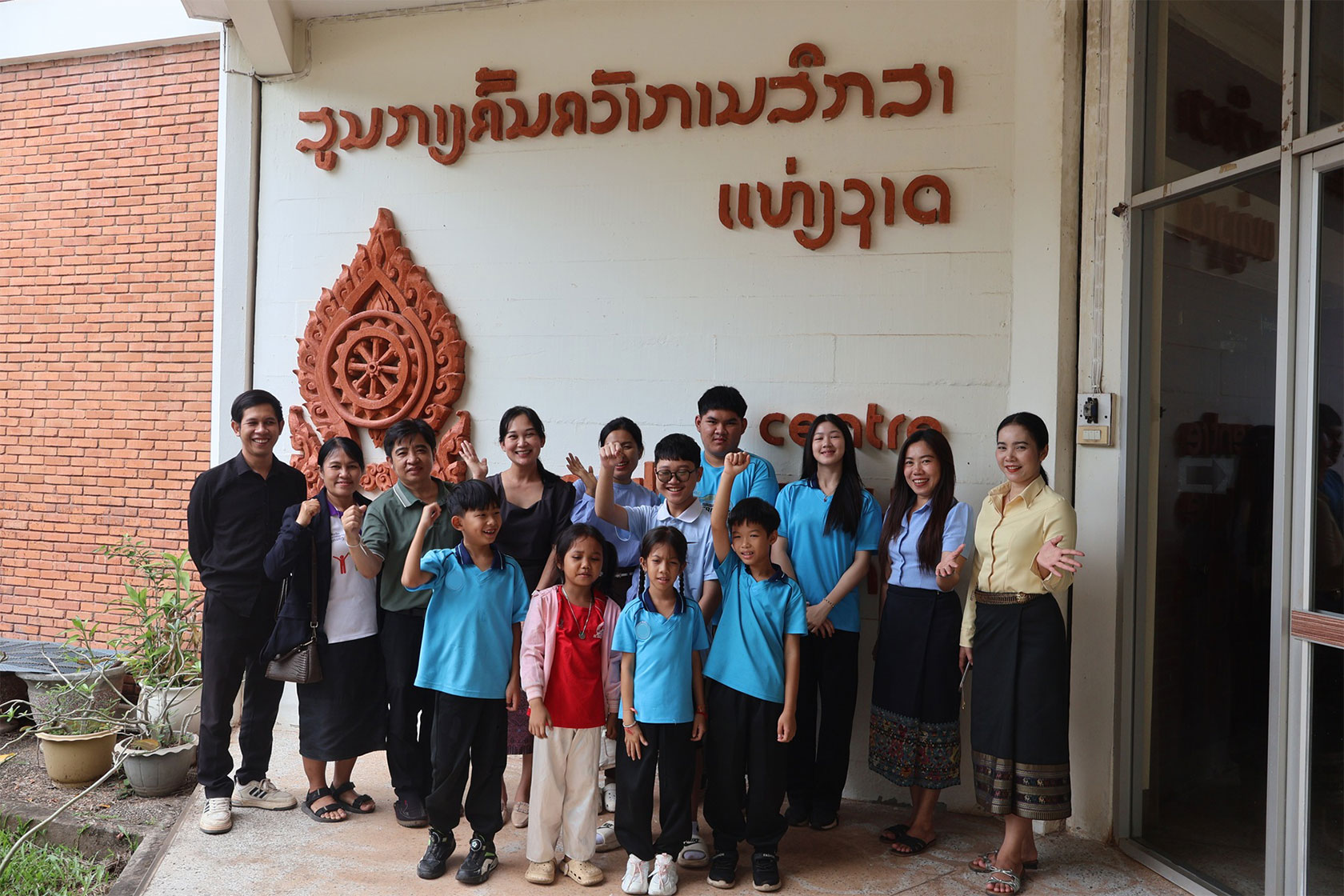
The IMC Radio team with student volunteers who recorded Grade 1 audio stories
New audio tracks will support teachers to deliver engaging Lao language lessons for Grade 1 students from non-Lao speaking communities
Recognising the unique challenges faced by children who do not speak Lao at home, the Ministry of Education and Sports (MoES) of Lao PDR, with the support of the Australian Government through the Basic Education Quality and Access in Lao PDR (BEQUAL) program, has produced a new set of 49 audio stories to support the teaching and learning of Spoken Lao in Grade 1 classrooms nationwide. The audio tracks will also soon be available as animated videos to enable widespread dissemination across audio and visual platforms, including YouTube.
This initiative, part of the broader Spoken Lao approach launched nationwide in September 2024, aims to help grade one students with a home language other than Lao develop essential oral Lao language skills so they can access the national primary curriculum and thrive academically.
“Teaching a new curriculum is always challenging,” noted Mr Outhit Thipmany, Deputy Director General, Research Institute of Educational Sciences (RIES). “In September 2024, we launched the teaching of the Spoken Lao approach nationally. Teachers received new teacher guides, textbooks, picture-word cards, story cards, and bingo games to help deliver dynamic Spoken Lao lessons. Since the essence of the Spoken Lao approach is about hearing and speaking Lao language, these audio tracks are a perfect and timely addition.”
“Our shared goal is for every child, regardless of their language background, to have the chance to succeed,” said Ms Vanessa Hegarty, First Secretary, Australian Embassy. “The Spoken Lao approach is transforming the learning experience of thousands of children in urban, rural, remote, and disadvantaged areas. Australia is proud to collaborate with the Ministry of Education in promoting inclusive education through the production of these new learning materials.”
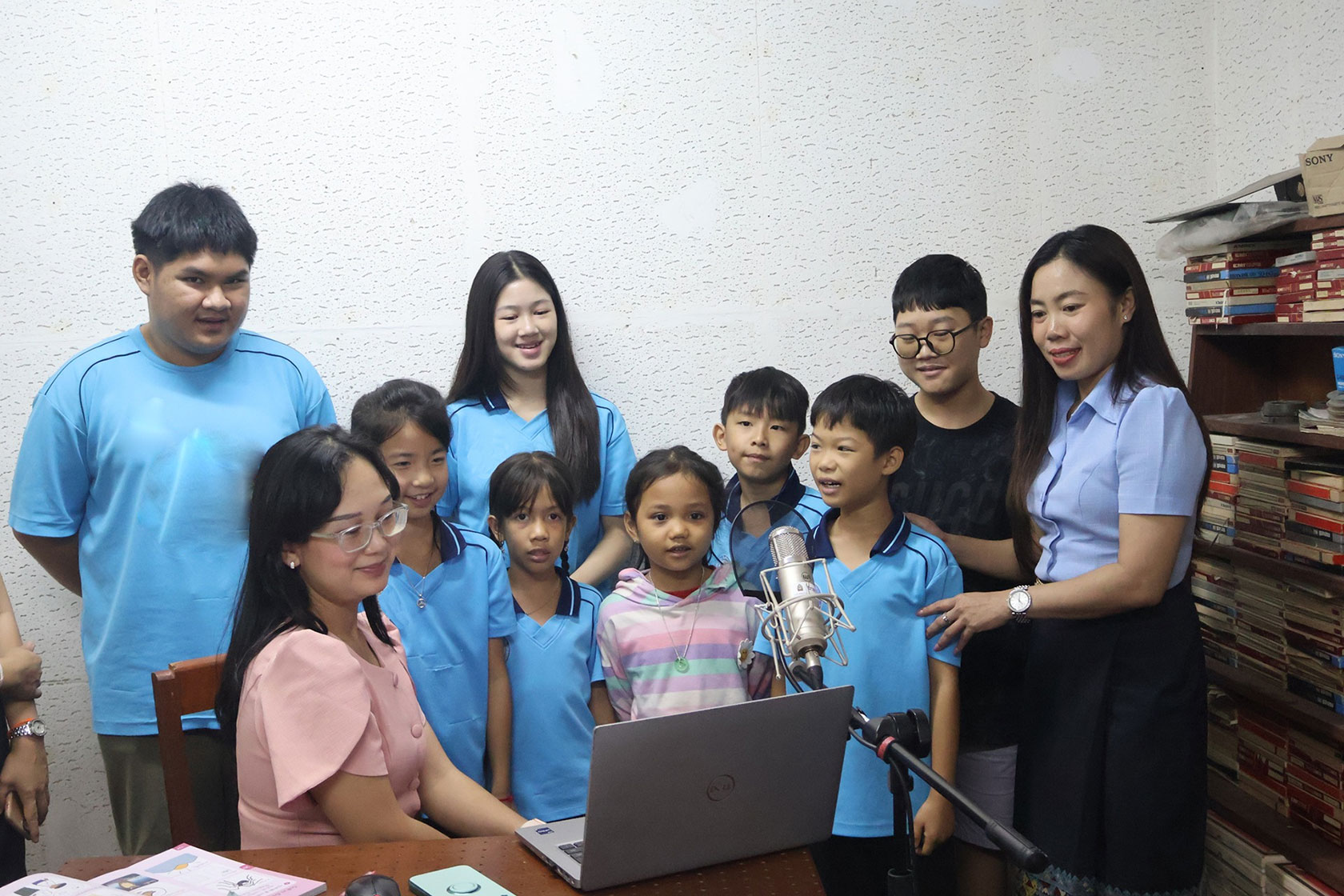
Student and adult volunteers recording stories, bringing Spoken Lao and Lao Language Grade 1 textbooks to life
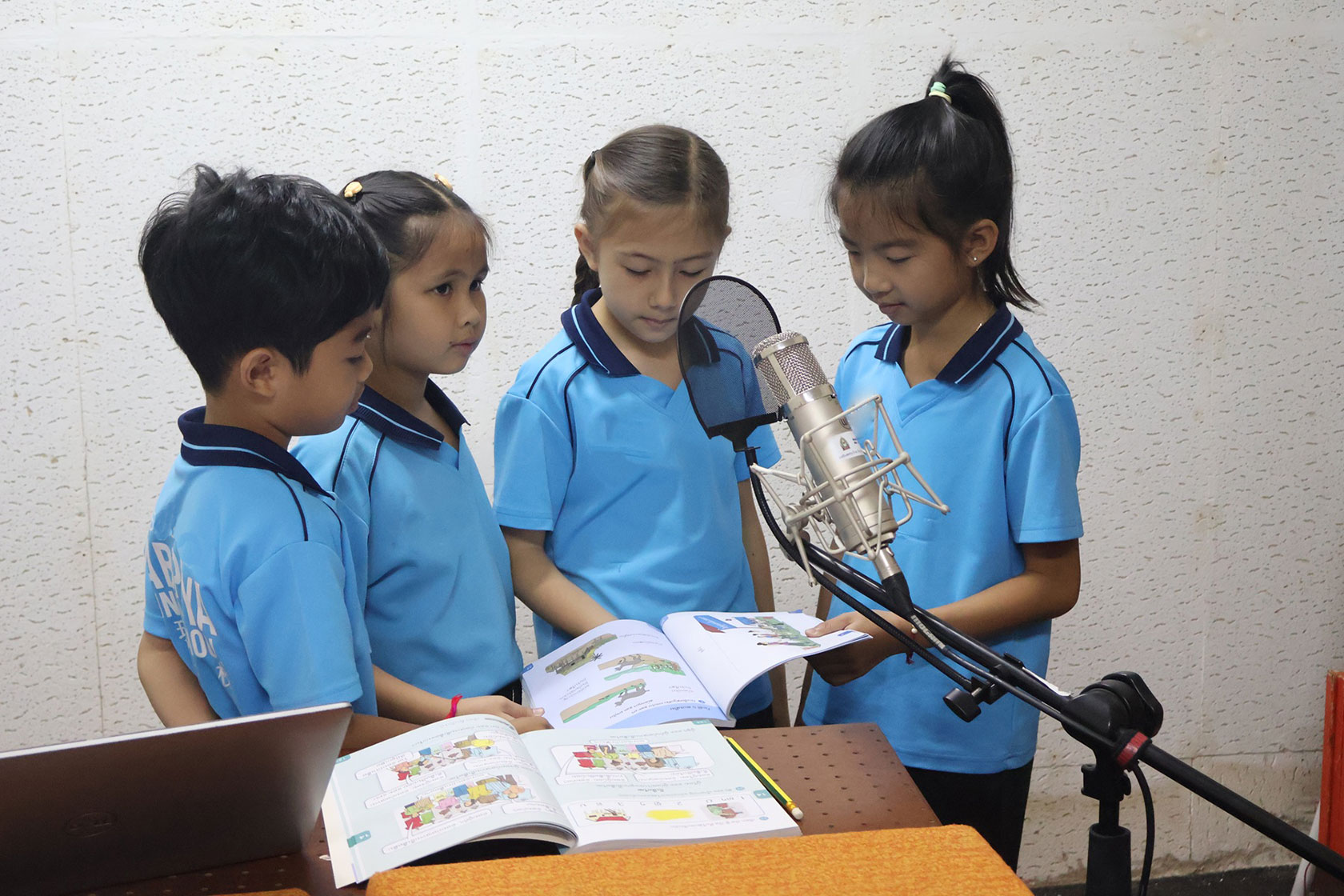
The young students were very enthusiast and professional
Produced by the Information Media Center (IMC) in collaboration with the curriculum developers from RIES with support from BEQUAL, the 49 audio tracks feature real voices of young Lao students and adult volunteers who brought stories from the Spoken Lao and Lao Language curriculum to life with enthusiasm, professionalism, and creativity.
The stories were carefully selected by RIES and are drawn from the Grade 1 Lao Language (19 stories) and the Spoken Lao (30 stories) textbooks. They reflect everyday communication relevant to Grade 1 students, such as talking about family, asking for things, and contributing in class, making them highly relatable and useful for language acquisition.
The IMC radio team enriched the recordings with sound effects such as dogs barking, whistling, crying, and clapping, to create lively and engaging listening experiences for children.
The audio materials are designed for flexible use: they can be played by teachers during class or used independently by students at home. Exposure to multiple voices and dynamic storytelling offers young learners essential listening practice, supporting their understanding and retention of new vocabulary and patterns of speech.
“Using the audio materials will enable teachers to play authentic language examples for students ,” explained Ms Paphavady Ekkanard, Head of the Radio Section, IMC. “They can expose their students to a variety of voices and make lessons more active and entertaining.”

Experts from IMC Radio and the Center for Lao Language Research trained student volunteers to record the audio stories

IMC Radio Section led production and editing of the Grade 1 audio stories
In addition to the audio tracks, RIES also produced the Teacher Development Video 25, a resource designed to strengthen teaching strategies for Spoken Lao. The video features real classroom practices and includes prompts to encourage teacher reflection and self-improvement. To promote accessibility, the videos are also dubbed in Sign Language.
Mr Outhit Thipmany highlighted the importance of these multimedia resources: “Primary teachers and educators supporting them use the videos and audio materials for lesson preparation and self-learning. They can also play the audio tracks directly in the classroom. These tools help them adapt and improve their teaching, so all students understand and learn.”
Beyond the Spoken Lao resources, RIES has also developed a wide range of audio materials, nearly 400 in total, to support the teaching of various subjects across primary grades. These include content for Orientation Week, Lao Language, and Music in Grade 1, Music and Physical Education in Grade 2, English for Grade 3, and both Lao Language and English for Grades 4 and 5.
To ensure teachers across the country can easily access these valuable resources, the materials are made available through multiple platforms. These include the “ວິດີໂອສຳລັບການພັດທະນາຄູ Teacher Development Videos” YouTube channel, Lao Education and Sports TV broadcast on Lao Sat Channel 8, Khang Panya Lao digital learning platform, MoES’ official Facebook pages and websites, and tablets distributed to internal and external pedagogical support staff at both the school and district levels.
The YouTube channel hosting these resources has already achieved over 5.5 million views, a testament to teachers’ appreciation for high-quality, practical support materials.
“This level of engagement proves that our teachers value these tools, and we are committed to continuing production of new videos and audio resources,” added Mr Outhit Thipmany.
Ms Vanessa Hegarty concluded “The Spoken Lao audio tracks mark another step forward in MoES and Australia’s shared commitment to inclusive, quality education for all children in Lao PDR. By equipping teachers with practical tools and supporting students with engaging, accessible materials, the partnership continues to promote equity in learning.”
New videos and audio resources are released regularly—visit the “ວິດີໂອສຳລັບການພັດທະນາຄູ Teacher Development Videos” YouTube channel or subscribe to stay updated and ensure no teacher or student is left behind.