
 ພາສາລາວ
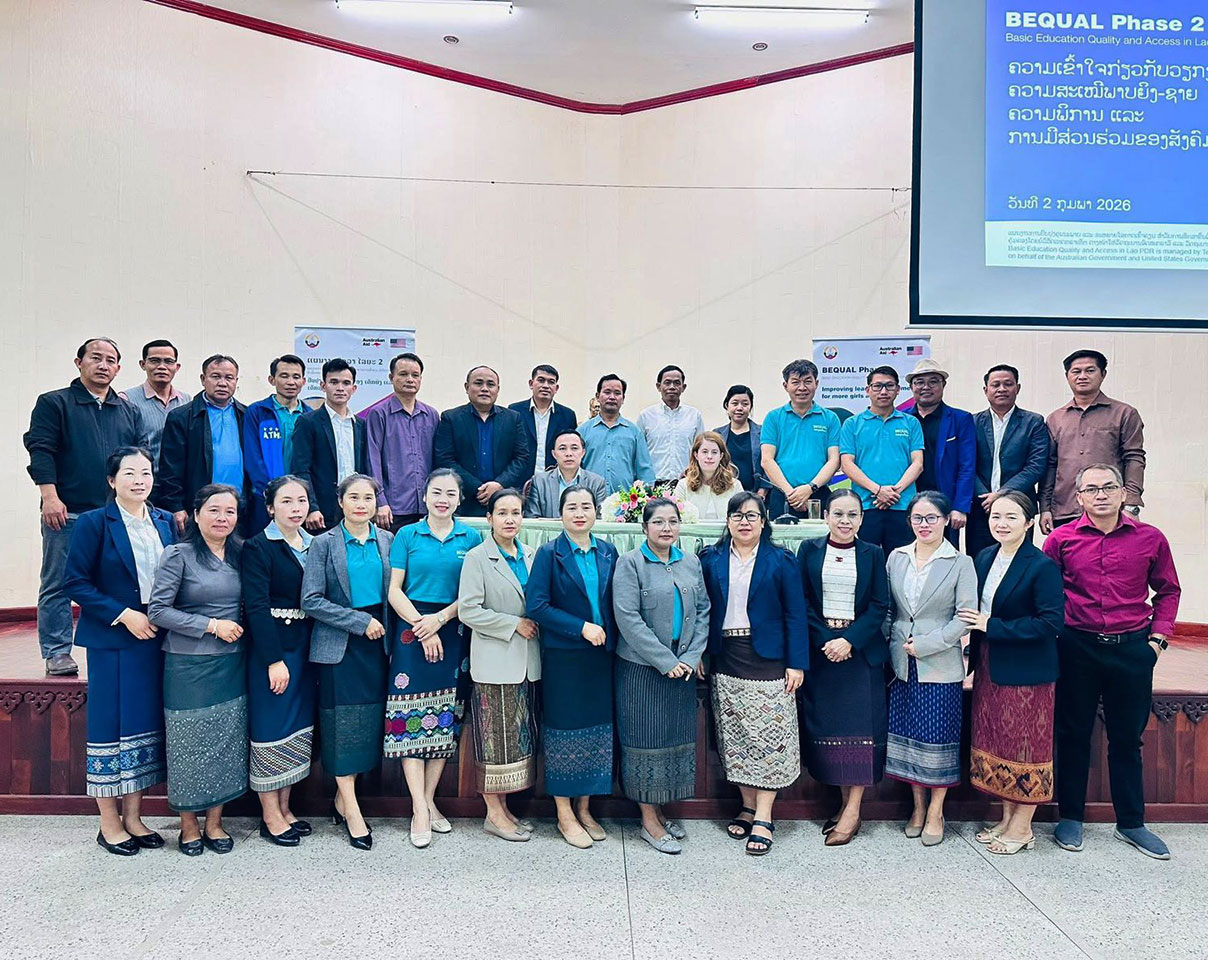
The team of enumerators from MoES and TTC
Year 3 of the Inclusive Teaching and Learning Study has begun with qualitative case study data collection in 30 target districts
In February 2026, the Ministry of Education and Sports of Lao PDR (MoES), with support from Australia through the Basic Education Quality and Access in Lao PDR (BEQUAL) program, commenced a third year of research to identify practices that strengthen student belonging, engagement and learning through the Inclusive Teaching and Learning Study.
Launched in 2024, the three-year longitudinal study covers 30 target districts across seven provinces – Phongsaly, Luang Namtha, Bokeo, Houaphanh, Xiangkhouang, Khammouane and Savannakhet. The study combines annual qualitative case study data collection in 21 schools with Early Grade Language Assessments (EGLA) in 120 schools. It tracks changes in classroom practice, school culture and physical environments, parent and community engagement, and student learning outcomes.
Mr. Phetmany Sylatmena, Deputy Director General of the Department of Teacher Education said “The Department of Teacher Education guided school selection and the design of field research activities to ensure comparable, longitudinal evidence. This study tracks students’ progress from year to year as their teachers participate in regular continuing professional development activities. It will help us identify which teaching strategies effectively engage all students in learning, especially students who need extra support to overcome challenges related to language barriers, irregular attendance, and disability. The findings from year three will highlight practical approaches that enable every child to participate, belong and learn.”
Mr Michael Currie, First Secretary, Australian Embassy said “Recognising the importance the Ministry of Education and Sports places on this inclusive study, Australia is proud to partner with the Ministry on this longitudinal study. The third year is an important stage for consolidating learning on how students’ attitudes and behaviours have changed since year one, and understanding how those shifts influence their sense of belonging at school and learning outcomes. The study will identify the practical classroom approaches and school support mechanisms that enable children whose mother tongue is not Lao, who have a disability, or can’t attend regularly, to participate and thrive in school.”
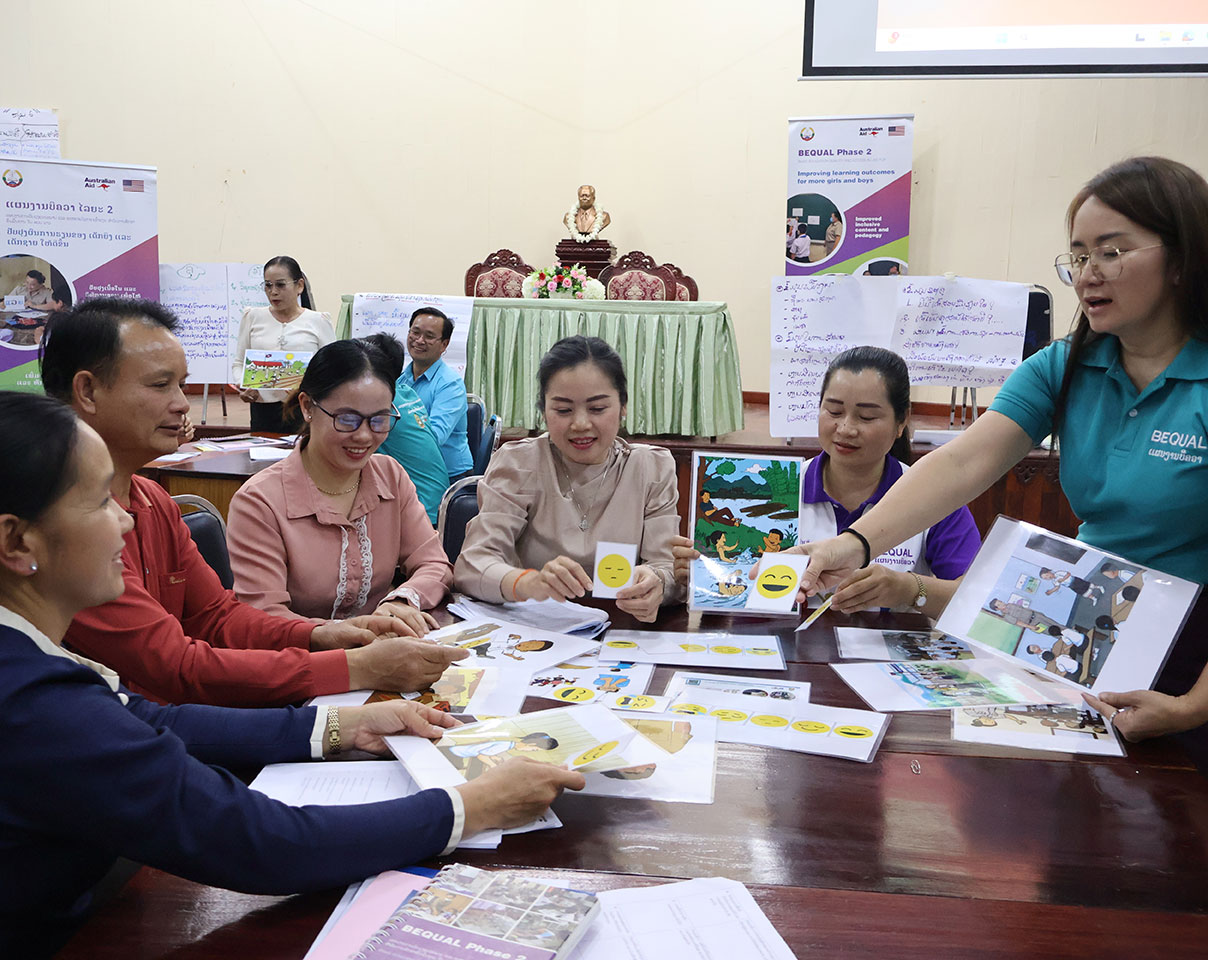
Enumerators received a 5-day training on the tools for the qualitative data collection
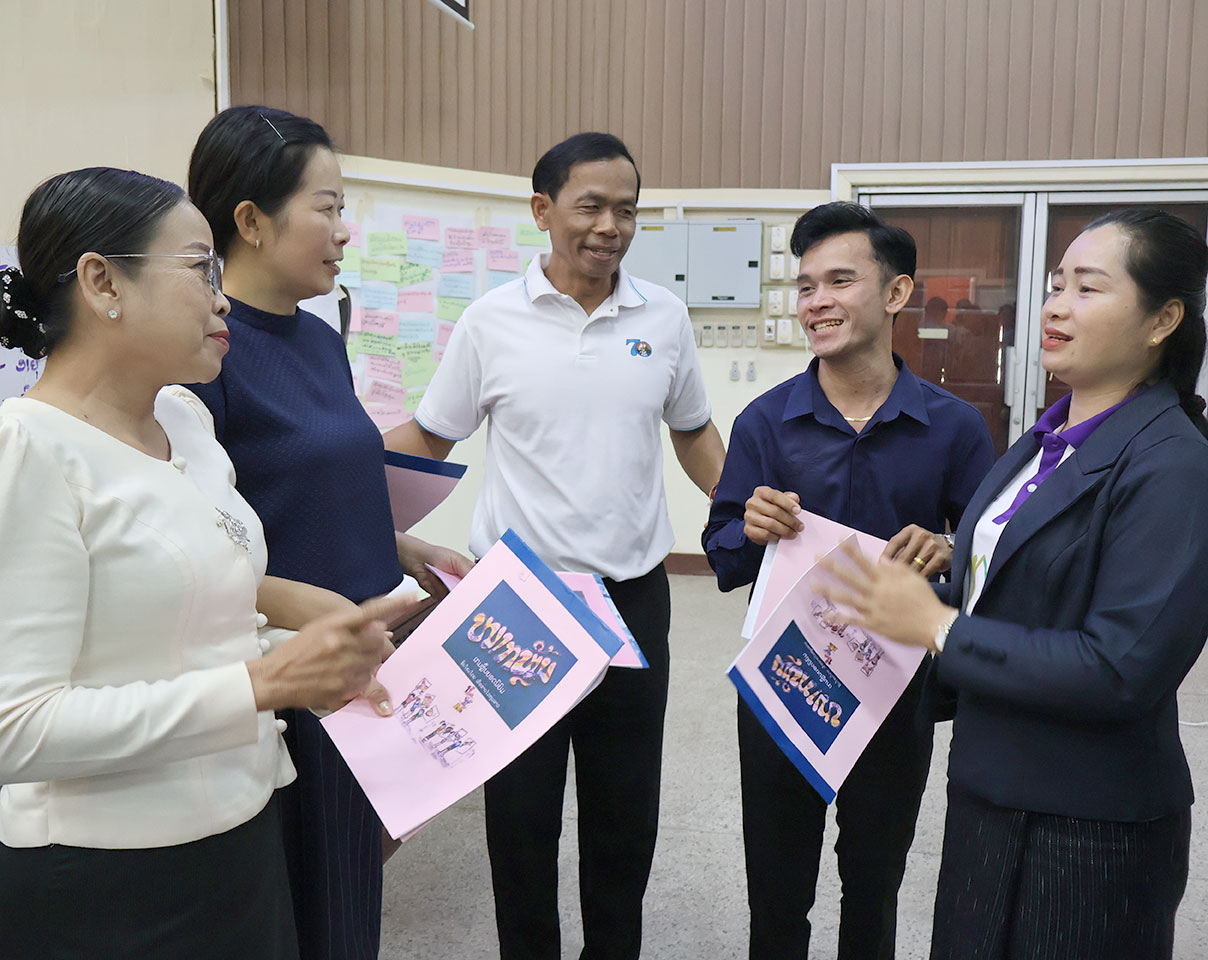
Enumerators reviewing the icebreakers the teachers could use to get students more engaged
Over February and March a team of 21 enumerators from MoES and Teacher Training Colleges (TTCs), accompanied by 33 staff from Provincial and Education and Sports Services (PESS) and District Education and Sports Bureaus (DESB), will travel to primary schools to collect qualitative data. The year three field work follows the same cohort and methods used in previous years, including interviews with principals, teachers, Internal Pedagogical Support staff (IPS), students, parents and Village Education Development Committee (VEDC) members. The team will also observe grades one to three classes, and record details about the school environment and infrastructure.
Following the qualitative phase of data collection, trained enumerators will carry out EGLA testing in 120 schools with grades one and three students. The grade three students are the same cohort who have been participating in the study since they started school in 2024. The grade one students are a new group joining the study to enable comparison of their learning outcomes with students who started school when the study was first launched.
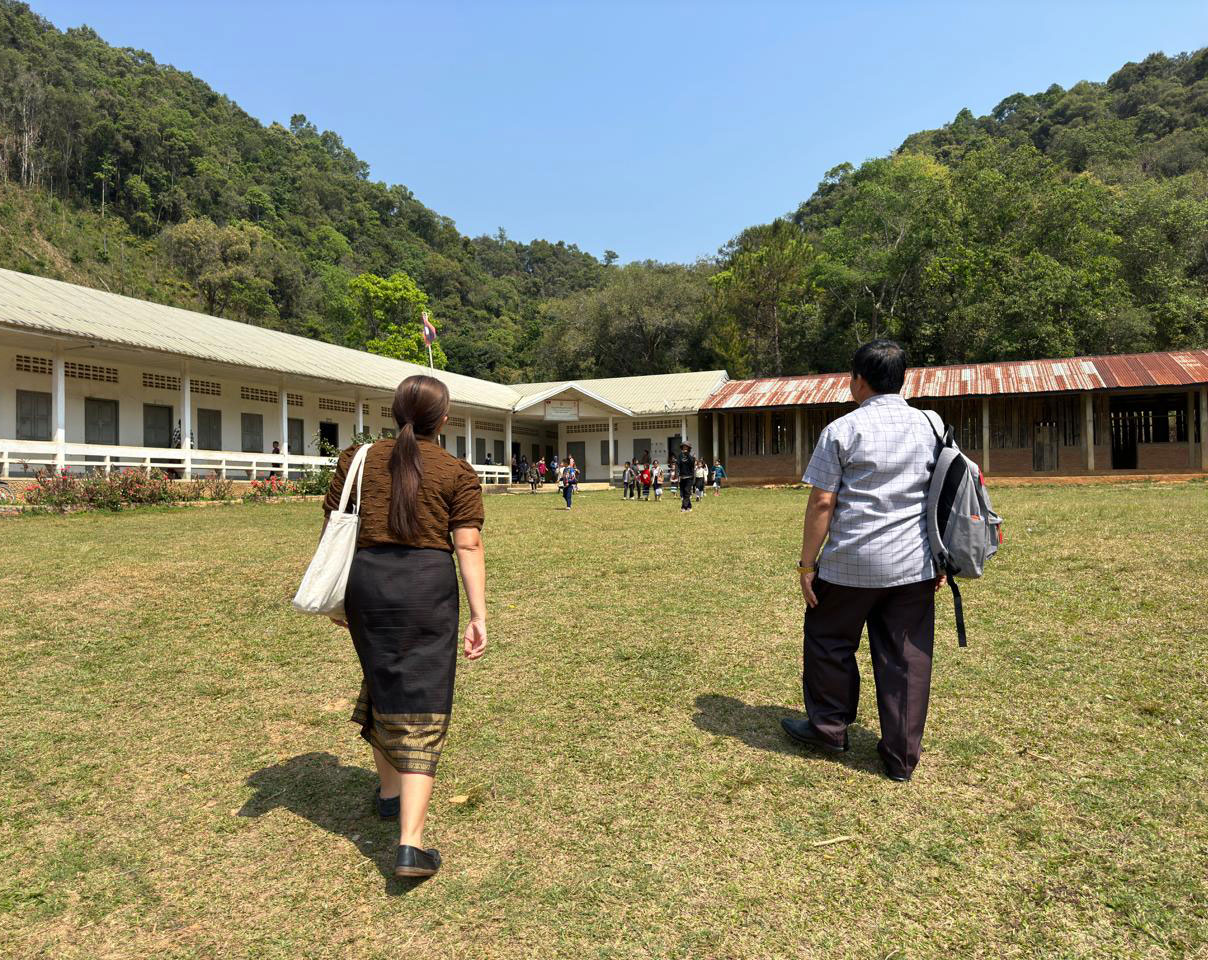
The study covers 30 remote target districts across 7 provinces
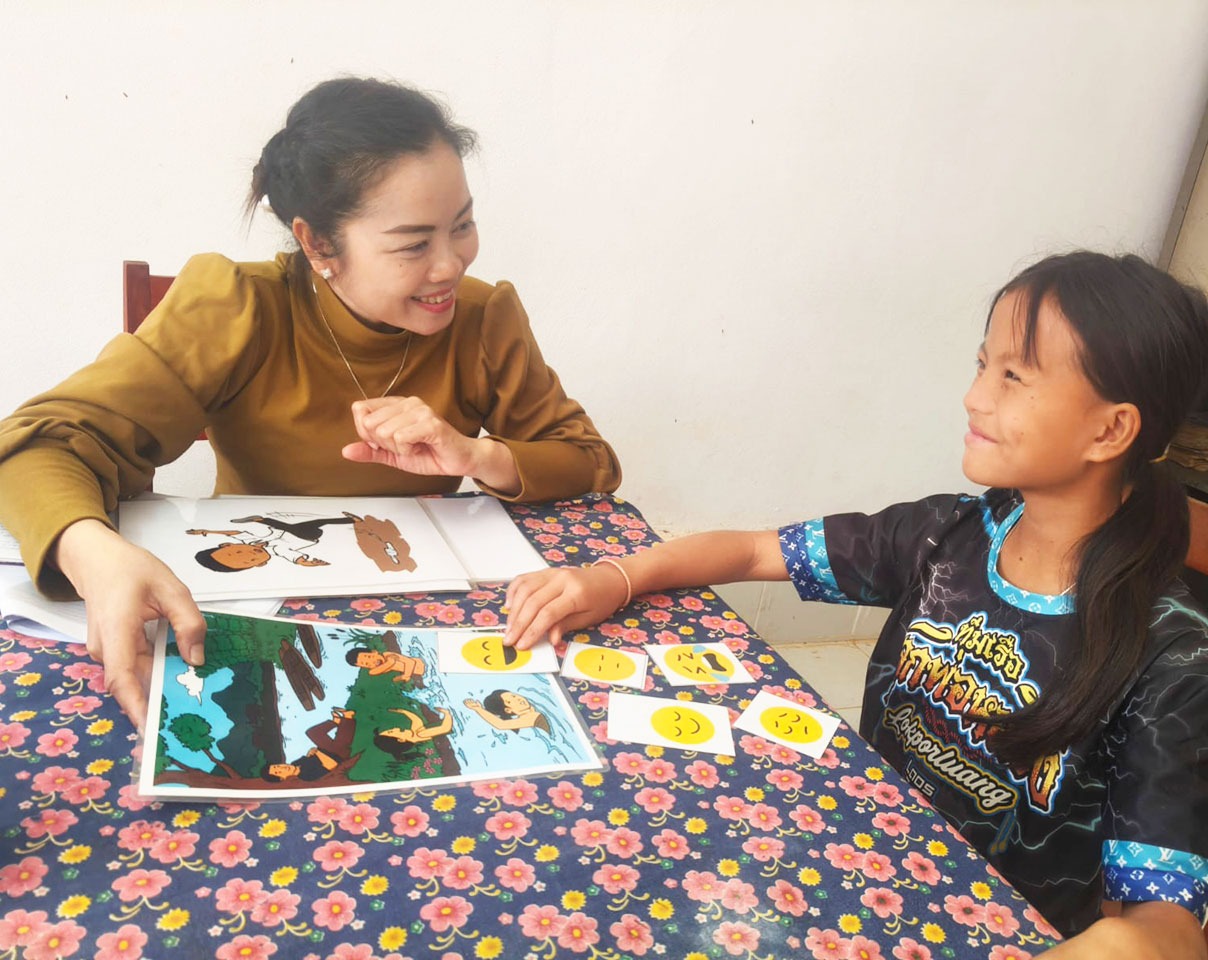
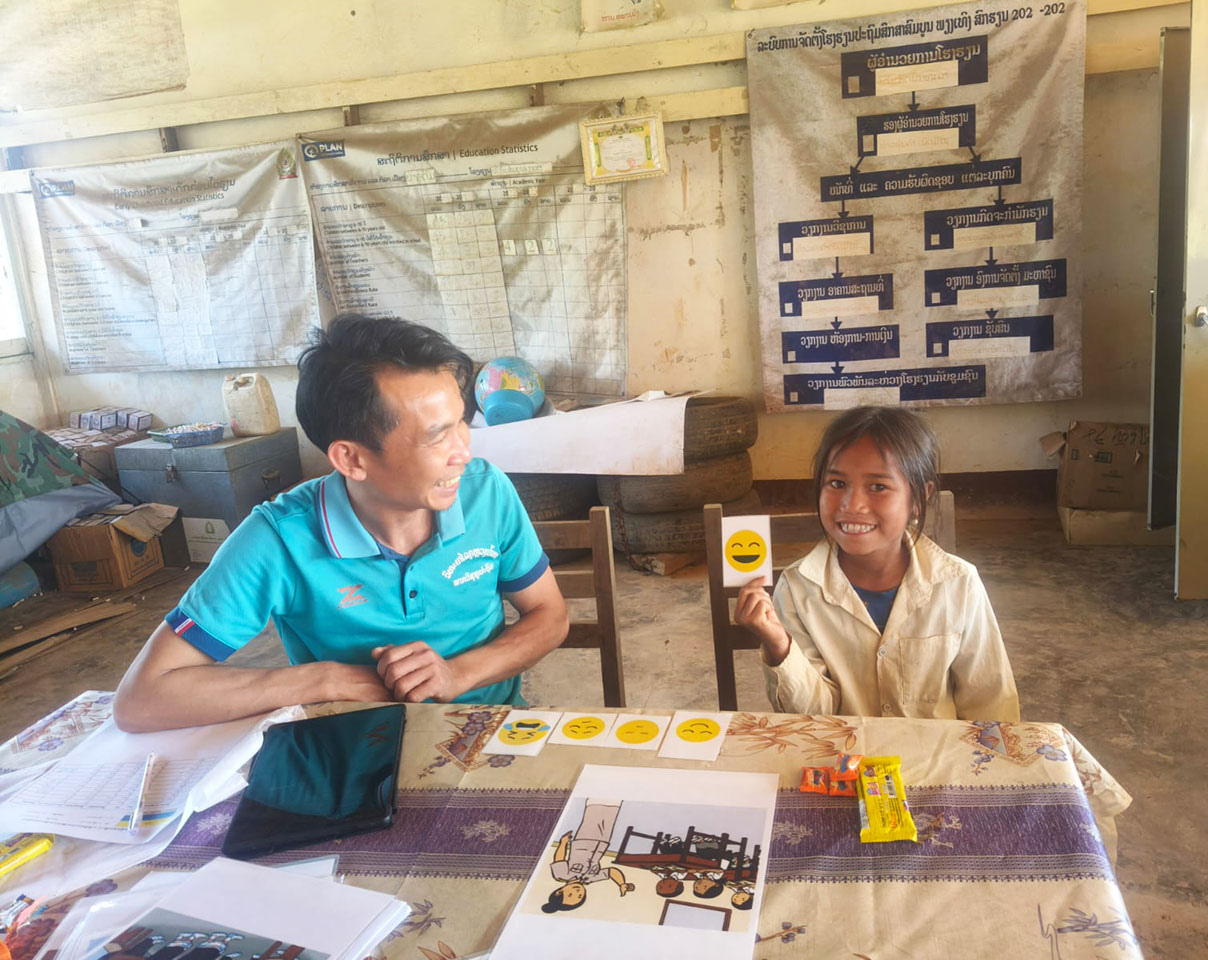
Emojis are used to help students express their feelings
Mr. Phetmany explained “Once fieldwork is complete and EGLA data are analysed, we expect to identify practical classroom approaches that remove barriers to engagement and learning, and to use those insights to strengthen teacher support. These findings will inform continuing professional development and school‑level strategies that promote belonging and improved learning outcomes for all children, reflecting MoES and Australia’s shared commitment to inclusive learning.”
Mr. Michael Currie added, “We look forward to collaborating with MoES to turn the study findings into practical resources and policies that support disadvantaged learners. The evidence will guide improvements in education practice so that all students receive the support they need to succeed at school and in life. Australia remains committed to strengthening this partnership and advancing teaching methods that foster inclusive learning for every child.”
BEQUAL is a program led by the Lao Government with support from the Australian Government and the United States Government. The program focuses on enhancing educational outcomes for the nation’s youth, especially the vulnerable and disadvantaged. BEQUAL is focused on ensuring gender equality and promoting inclusive education across all activities.